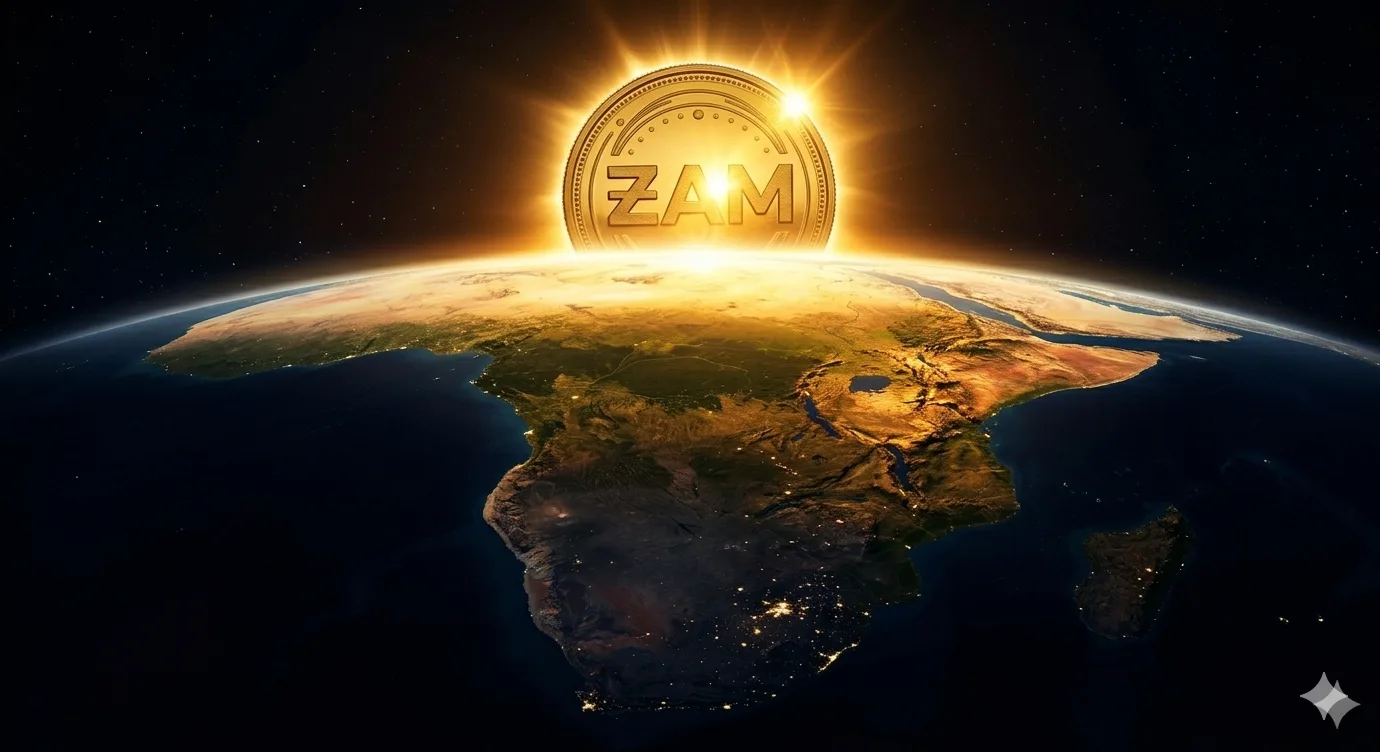
The Waves That Passed Us By
In 2009, a programmer published a nine-page document that would change the world. Bitcoin launched at $0.001 per coin. A handful of people in the United States and Europe bought thousands of coins for less than the price of a loaf of bread. Africa had no idea it was happening.
By the time crypto news reached African shores — through WhatsApp groups, hushed conversations, word of mouth — Bitcoin was already $10,000. Then $50,000. Then $100,000. The window had closed. The wealth had been created. Africa watched from the outside.
It wasn't just Bitcoin. Every wave of crypto value creation has followed the same pattern — built in the West, discovered in the West, priced in dollars that most Africans don't hold, and by the time the news arrives here, it's too late.
Every single time, the pattern is the same: built elsewhere, discovered elsewhere, by the time we hear about it — the price has already multiplied by thousands. Africa buys at the top and wonders why crypto never works for them.
The Real Problem Isn't Just Missing Out
The missed gains are painful. But the deeper problem is what they represent: Africa has never had a seat at the table when financial tools are being created. We have always been handed finished products — products designed for someone else, priced in someone else's currency, running on someone else's infrastructure.
The result? 1.4 billion people on the most resource-rich continent on earth remain the most financially excluded on the planet.
World Bank, 2023
World Bank, 2023
GSMA, 2023
Chainalysis, 2023
These numbers tell a story that's been told for decades. Africa adopts financial technology faster than almost anywhere on earth — M-Pesa changed Kenya before the rest of the world understood mobile money. Yet the tools are always built by outsiders, and the profits always flow out.
When Your Money Isn't Safe
For many Africans, financial privacy isn't a preference — it's a matter of survival. Across the continent, currency crises have destroyed lifetimes of savings overnight.
Zimbabwe
Hyperinflation peaked at 79.6 billion percent in 2008. People carried wheelbarrows of cash to buy bread. Bank accounts were wiped to zero. Today the crisis continues — the ZiG currency has already lost value since its 2024 launch.
Nigeria
The naira lost over 60% of its value against the dollar in 2023–2024. The government banned dollar withdrawals from ATMs. Nigerians turned to crypto in record numbers — only to find exchanges shutting them out.
South Africa
The rand has lost over 80% of its value against the dollar over the past 20 years. Every South African with savings has watched those savings shrink, year after year, measured against the rest of the world.
Ghana
The cedi lost over 50% of its value in 2022 alone, triggering a debt crisis. Ghana became the first African country to get an IMF bailout in decades. Ordinary Ghanaians were left holding worthless paper.
In each of these countries, people who held assets outside the collapsing system preserved their wealth. People who held only local currency lost everything. Privacy and portability aren't luxury features — they are necessities for billions of people on this continent.
"Africa doesn't need permission to build its own financial system. We just needed someone to start."
— The Zama FoundationWhy Existing Crypto Wasn't the Answer
Crypto promised financial freedom. And for many Africans, it delivered — partially. Nigerians used USDT to protect savings. Kenyans used Bitcoin to send money home. But every tool available came with the same fundamental flaw: it wasn't built for us.
Bitcoin mining requires expensive ASICs — hardware that costs tens of thousands of dollars and is controlled by a handful of industrial operations in China and the US. African participation in Bitcoin's economic base was always second-class.
Ethereum's high gas fees price out small transactions — exactly the type that most Africans make every day. Sending R50 shouldn't cost R200 in fees.
And privacy? Most cryptocurrencies offer none. Every transaction is permanently, publicly recorded on a blockchain that anyone in the world — including governments and tax authorities — can read. In countries where financial surveillance is used as a political tool, this is not a minor inconvenience.
What Zama Changes
Zama was built from scratch with African realities in mind. Not adapted. Not forked and rebranded. Built — with specific answers to specific African problems.
CPU Mining — Anyone Can Participate
Zama uses RandomX — the same algorithm as Monero. Any laptop, any desktop, any server can mine it. No $50,000 ASIC required. Africa has computers. Africa can mine Zama.
Privacy by Default
Every Zama transaction is private. No public ledger. No one can see what you hold or where you send it. For people living under financial surveillance or capital controls, this is not optional.
Built in Africa, for Africa
Zama's founding team is African. The server is chosen to serve Africa. The roadmap prioritises African exchanges. For the first time, an African community holds the founding price.
$0.10 Founding Price
BNB was $0.10 at founding. It's now $620. Zama is $0.10 today — and for the first time, it's Africans, not outsiders, who are getting in at the start.
Hard Cap of 100 Million
Like Bitcoin, Zama has a fixed supply. 100 million ZAM — forever. No central bank. No government. No inflation. The same scarcity as gold, backed by mathematics.
Fast & Borderless
Send ZAM from Cape Town to Lagos in seconds. No bank approval. No SWIFT fees. No asking permission. Money that moves as freely as people should.
The 4 Million ZAM Goal
Before opening to the public, Zama is mining a founder reserve of 4 million ZAM. This reserve funds development, exchange listings, community rewards, and the long-term sustainability of the network.
Once the 4 million ZAM target is reached, the mining pool opens to the public. Any African with a computer can point their CPU at the pool and start earning ZAM. The exchange listing follows. The price discovery begins — with Africans already holding coins, not scrambling to buy at the top.
Current progress: live on the transparency page. Every ZAM mined is publicly tracked. No hidden reserves. No secret pre-mines. What you see is what exists.